Not everyone shares my enthusiasm for PPVC. Architects often prefer Advanced Precast Concrete Systems (APCS) for the flexibility—fair enough. But having spent most of my career on the delivery side, I stay drawn to PPVC for a simple reason: it behaves the way I believe construction should.
Walking through the PPVC yard, what looks like a collection of concrete modules is actually a warehouse of decisions—coordinated, tested and manufactured long before the building reaches site.
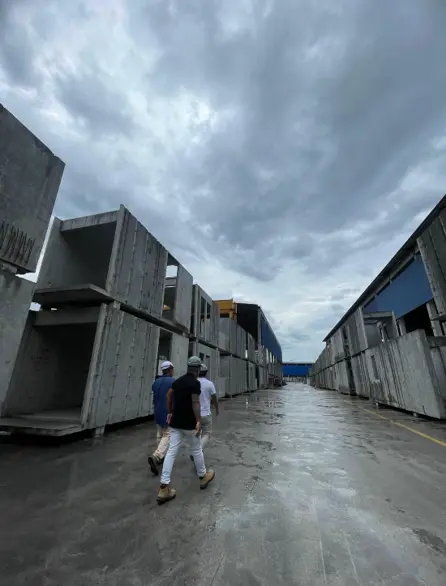
Most project problems aren't technical. They're timing problems. The information exists. The answer exists. The coordination happens—eventually. It just arrives late.
By the time a clash is discovered, somebody has already installed something. By the time a risk is recognised, the cost has multiplied.
PPVC forces a different discipline: think earlier, coordinate earlier, decide earlier. Arguments that would normally surface mid-construction get dragged into design meetings instead. Predictability isn't a bonus. It's the entire point.
A Coordination System Before It Is a Construction System
Conventional construction defers almost everything. A ceiling detail gets adjusted later. A tiling set-out gets sorted by whoever's standing nearest. An M&E clash gets solved with goodwill and a grinder.
PPVC removes most of that flexibility. Façade interfaces, M&E routing, waterproofing, structural openings—all resolved before fabrication begins, because the factory doesn't tolerate uncertainty the way a site does.
The most important part of PPVC happens before the concrete is poured: checking the MEP provision in the flooring slab. This is where engineering decisions become physical reality.
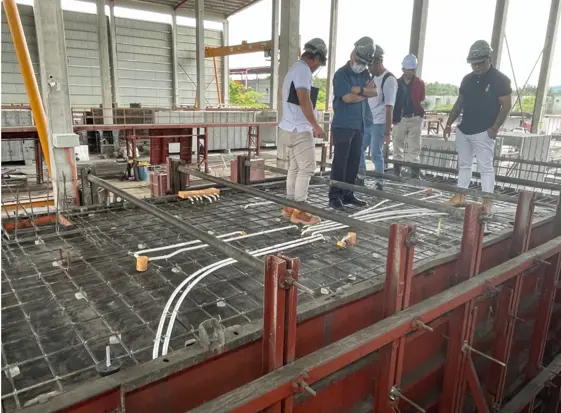
It runs deeper still: conduits, drainage penetrations, sanitary stacks, gas and water pipes—all embedded before a single tile goes in. By fit-out stage, most engineering decisions are frozen.
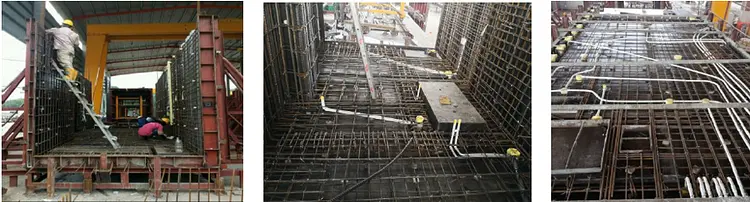
What most people picture as a concrete box is, by then, closer to a fully serviced shell. The irony: the modules aren't the hard part. Getting hundreds of people to agree on thousands of details early enough to manufacture them is.
Decisions Arrive Early, or They Arrive as Defects
Grand Dunman taught me this clearly: most construction defects aren't workmanship problems. They're decisions that arrived late. Unanswered questions don't disappear—the site answers them anyway, through hacking, rework, aborted installations, or a few days quietly added to the programme.
PPVC makes that lateness expensive in a way conventional construction never quite manages. The lesson was not about engineering. It was about timing.
PPVC doesn't eliminate mistakes. It forces them to surface earlier—while they're cheap, or, if the timing is wrong, while they're catastrophic.
The Building Is Manufactured Before It Is Built
What a module actually contains by the time it leaves the factory rarely makes it into public accounts of PPVC. It should.
On Grand Dunman, modules departed with plumbing installed, water pressure tested, electrical conduits run and air-conditioning and gas pipework fitted without internal joints—checked again by X-ray on site. A bathroom module left the factory with most of its engineering already done.
Sanitary systems were pressure tested in Malaysia, plumbing tested again in Singapore, water-tightness tested before the module left for site and again after installation. That's not less inspection than conventional construction. It's more—once modules are stacked, rectification becomes a very different proposition.
The joint-free pipework is not incidental. A joint that doesn't exist can't leak after installation. Every time a resident switches on the air-conditioning, choices made at production stage are quietly protecting them from problems they'll never know were engineered away.
This is information discipline. The building isn't built on site—it's assembled there. It's built in the factory, and the factory can't start until the information is right.
A Project Built in Three Places
Delivering 4,537 modules for over 1,000 residential units meant running a supply chain across two countries and multiple production facilities.
The structural shell was cast in Malaysia, then crossed the Causeway to a second Singapore facility for curtain walls, water-tightness testing, tiling, cabinetry, wardrobes and joinery. By the time a module reached Grand Dunman, much of the apartment already existed inside it.
The site was assembling homes. Not building them.
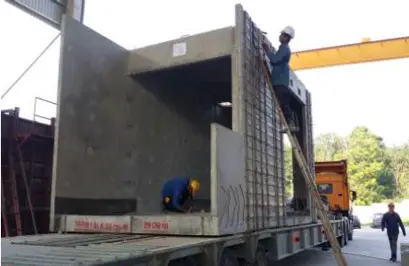
Regular visits to PPVC casting yards and fit-out factories were carried out to verify workmanship, dimensional accuracy and interface coordination before the modules entered full-scale production.
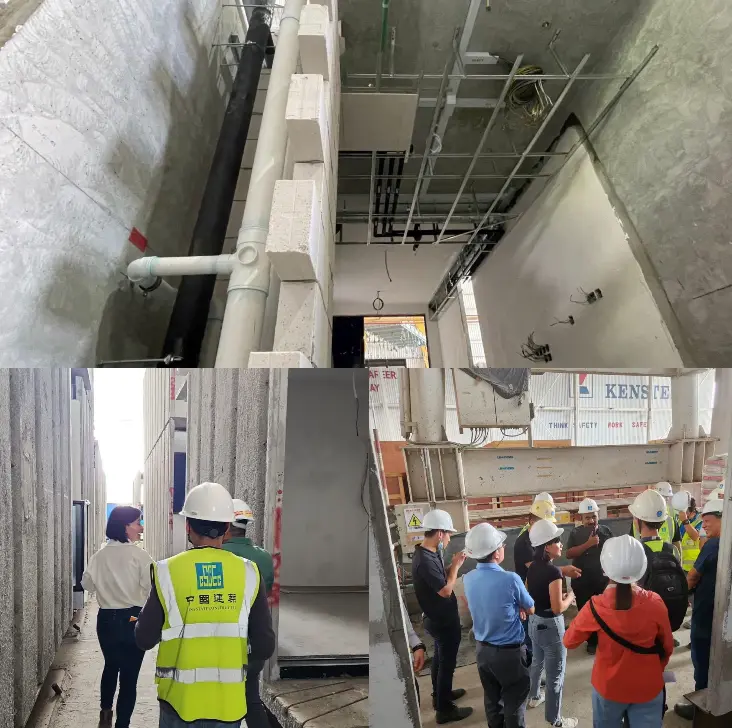
A module's route: factory, fit-out facility, storage yard, customs, the Causeway, crane, final position. A traffic jam in Johor could shift a crane schedule in Singapore. The project had joined a supply chain, whether anyone intended it to or not.
A future homeowner's bedroom may have been cast in one factory, fitted out in another, shipped across a border, and lifted high storey into the air—long before its owner even collects the keys. The room finishes its journey before the person who will live in it does.
When Airspace Becomes a Design Consultant
One of the stranger constraints in Grand Dunman had nothing to do with architecture, engineering, or construction. It had to do with aircraft.
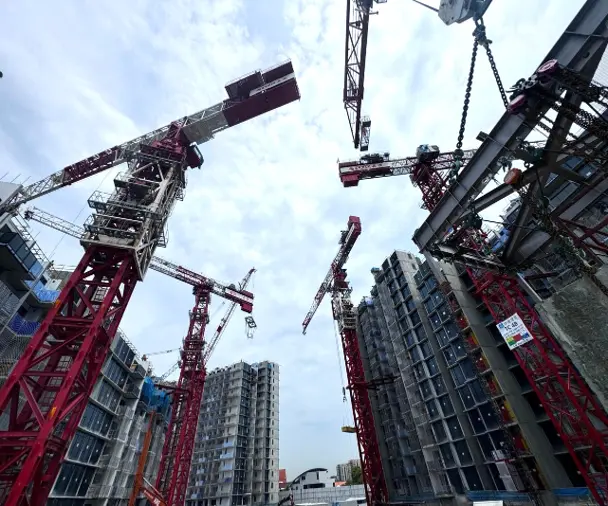
The building stands 64 metres above mean sea level. The CAAS construction height restriction for this site is also 64 metres. Those two numbers are not a coincidence. They are the entire problem. The envelope is not tight. The envelope is exactly full.
Standard PPVC tower cranes could only reach the lower storeys. The answer was a 500-tonne luffing mobile crane—infrastructure-scale equipment built for bridge launches and port structures, not condominiums, working at the exact ceiling aviation law allowed.
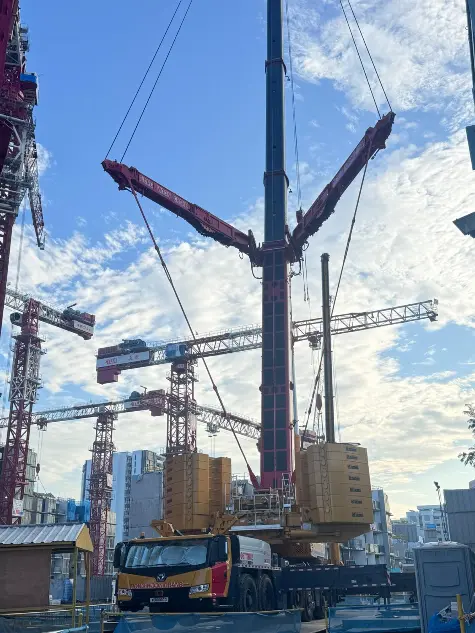
The building's upper floors exist, in part, because a 500-tonne machine was willing to work at the edge of the permitted envelope. Not one centimetre beyond it.
When airspace became a design consultant, a 500-tonne crane joined the project team.
We like to think buildings are shaped by architects and engineers. They're equally shaped by airports, roads, regulations, customs checkpoints, and logistics networks. PPVC just makes the invisible ones impossible to ignore—or defer.
Before any of that, somebody had to ask a more basic question: can this module physically travel from factory to site? Width, height, weight, bridge clearances, permits—a few centimetres added in a design meeting can ripple into crane selection and the entire installation sequence. In a very literal sense, the roads of Johor and Singapore are on the design team. They never show up to a coordination meeting. They influence the outcome anyway.
Weather Matters Less. Information Matters More
Conventional construction stays hostage to rain, labour, site access and the sequencing of wet trades. PPVC moves most of that into a controlled environment. Weather matters less. Information matters more.
The factory can tolerate rain. It cannot tolerate ambiguity. The question changes from “Can we build it?” to “Have we thought about it properly?” There is nowhere left to hide a planning gap.
The Part That Never Makes It Into the Contract
No contract form, BIM protocol or regulatory gateway assigns the role that matters most: the person who holds the thread between a decision made in week four of design and its consequences three years later on installation.
Someone has to remember why the wall moved, why the services shifted, why the module dimension was frozen. Most projects rely on institutional memory. PPVC depends on it—early decisions here travel further downstream.
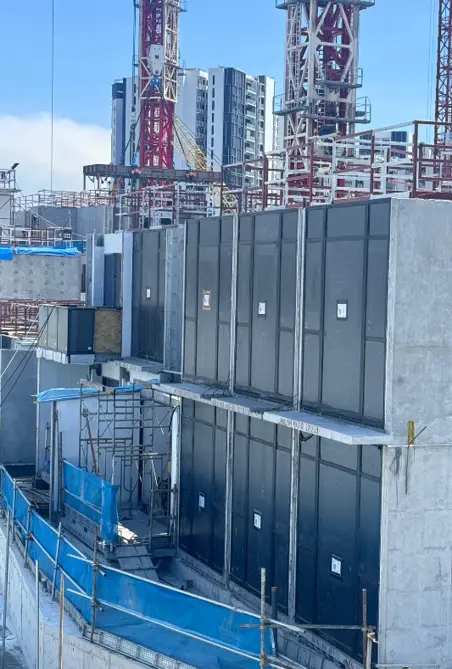
The crane may lift a module in twenty minutes. The information required to make that lift possible took six to nine months to accumulate.
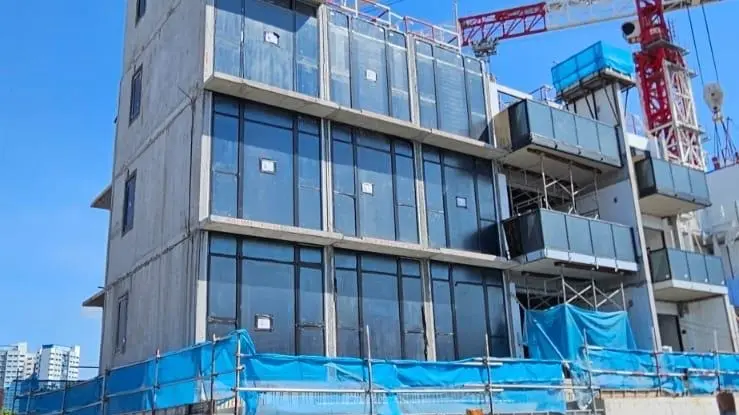
Looking back at thousands of modules, multiple factories, international logistics chains, aviation restrictions, and a 500-tonne crane working at the sky's exact limit—I no longer think of PPVC as a construction technology.
The modules are concrete and steel. What the process actually manufactures first is certainty.
I'm not sure the industry has fully caught up to what that demands. I'm not sure I have either.
Originally published on LinkedIn on 28 June 2026.