I was standing on a site in Nanjing on a Thursday morning when I noticed a large, high-definition monitor at the gate. It wasn't showing safety slogans or weather updates. It was a live optimization dashboard—three tower cranes tracked in real time, synced to the BIM model, labour counts, and material arrivals. Wind speed, hook position, swing angle, lifting queues, productivity counters—all updating live.
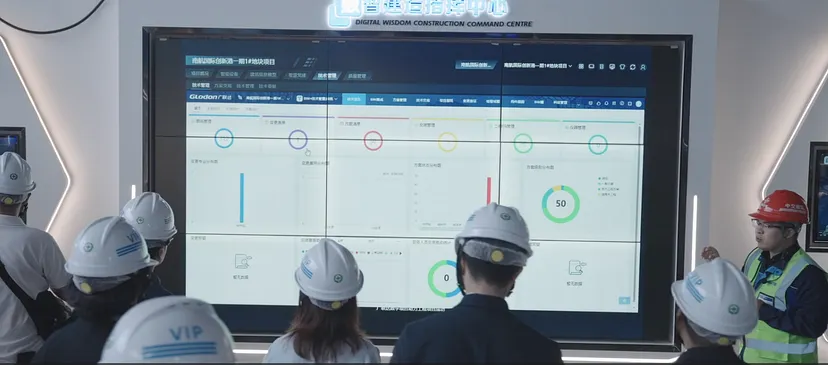
I half-jokingly asked the site manager, “Is this for show, or is it actually used?”
He didn't hesitate.
This is how we run the site.
I looked at the cranes, then back at the screen.
In China, construction looks like a tech operation.
In Singapore, our tech often still needs a meeting to explain what the data means.
That moment was humbling. It made me realize our coordination problem isn't a technology gap. It's an information-latency problem.
The Assumption
Before visiting Shanghai, Nanjing, and Wuxi, I assumed Singapore's slower pace was largely due to regulation and a lack of appetite for automation. I believed that if we could import China's robotic formwork systems or AI crane dispatchers, we could easily shave 20% off our timelines.
I was treating technology as plug-and-play productivity.
The Friction
Then reality set in.
In China, construction is vertically integrated. A single entity often controls design, manufacturing, logistics, and site execution. Fewer interfaces. Fewer negotiations. Fewer handovers. That's how “China speed” happens.
Singapore operates very differently. Our industry is horizontally fragmented—SMEs, specialist consultants, multiple authorities, layered insurers. When we introduce a new automation tool, friction appears everywhere:
- Systems don't talk to one another.
- Insurers struggle to underwrite unfamiliar risks.
- Subcontractors see no incentive to invest when the payoff isn't theirs.
- Site teams still need parallel paper trails to stay compliant.
This isn't just bureaucracy. It's our commitment to certainty.
We trade speed for assurance—structures that last, risks that are accounted for, liabilities that are clear. That certainty is deliberate, not accidental.
The Insight
What struck me in Nanjing wasn't the robots. It was the absence of latency.
In China, coordination is embedded in the system.
In Singapore, coordination is still manual labour.
We spend an extraordinary amount of time aligning on what version of the truth we're working with. Meetings aren't the problem—they're the symptom.
Automation and AI shouldn't be framed as labour replacement. On complex, high-risk sites, they are risk absorbers. A robotic formwork system doesn't just work faster; it works consistently. It removes fatigue, reduces variability, and lowers the chance of safety lapses and quality defects.
Resilience isn't about being fast. It's about being unshakable when disruption hits.
The Implication: Horizontal Coordination
Singapore will never win by trying to integrate vertically like China. We're too small, and our ecosystem is too diverse.
Our advantage lies elsewhere—in horizontal coordination.
This is where the role of the regulator evolves. Not just as an enforcer, but as an ecosystem orchestrator.
The Shared Spine
Platforms like CORENET X are more than submission portals. They are the digital spine the industry must plug into. When developers, contractors, consultants, and regulators operate on the same real-time data, approval latency starts to disappear.
The Behavioural Shift
Transformation fails when treated as a tech upgrade. It requires senior leaders to trust data over meetings. If I can see crane cycle times on my phone, I don't need a weekly report to tell me we're behind.
The Research Feedback Loop
The distance between academia and site must shrink. In China, research moves into live pilots within weeks. In Singapore, we tend to over-study. We need more ugly pilots—imperfect tests on real sites—to find out where technology actually breaks.
Final Reflection
China showed me what integration at scale looks like.
COVID showed me how fragile manual coordination can be.
The lesson isn't that we should build faster.
It's that we should build smoother.
If coordination becomes our core competency—enabled by shared platforms, led by regulators, and owned by senior practitioners—we won't need to copy China.
We'll have built something uniquely Singaporean: a system that is as resilient as it is precise.
Not louder. Just smarter.
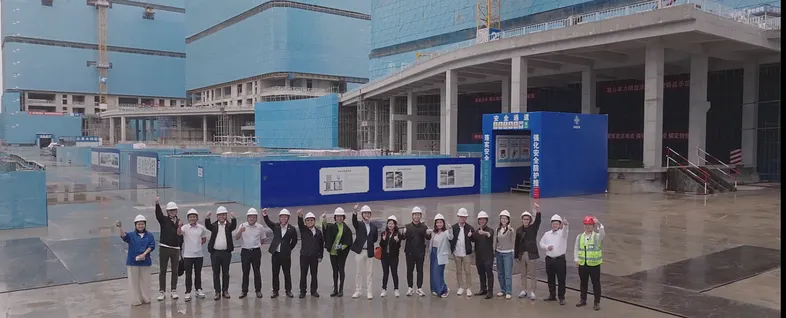
This reflection came from a learning journey to Shanghai, Nanjing, and Wuxi organized to understand China's smart construction approach. The goal wasn't replication—it was to see what resilience looks like when coordination is designed into the system, not layered on top.
Originally published on Medium on 23 December 2025.