Imagine a consultant proposing another million dollars to make a condominium easier to maintain. Better façade access, more durable materials, enough space to replace equipment without demolishing whatever we have thoughtfully built around it. All sensible suggestions. The savings will come over twenty or thirty years. The million, however, is needed now.
Sitting on the developer’s side of the table, I have to explain why we should pay today when much of the benefit will eventually go to homeowners and their MCST. Everyone supports sustainability. The meeting becomes rather quieter when we discuss whose budget it comes from.
Green Mark Version 7 Meets the Cost Plan
This is why Green Mark Version 7 interests me. Launched by BCA on 2 September 2026, it brings a more performance-based approach and greater flexibility to green building certification. The changes include an energy-focused certification pathway, recognition of alternative cooling technologies and a new SLE70 tier for buildings achieving over 70% energy savings against the relevant 2005 baseline. These are useful developments, but my question is practical: can Version 7 help us make a better investment decision before someone says, “Too late already”?
For an office or shopping mall retained by its owner, the calculation is relatively straightforward. The owner pays for efficient systems and benefits from lower operating costs, potentially stronger rentals and a more competitive asset. The expenditure and the return stay together. Residential development separates them. We acquire the land, design, build and sell. The MCST eventually takes over the common property, including the bills. We fund the improvement during construction; homeowners enjoy much of the saving after handover.
That makes a perfectly sensible investment over thirty years surprisingly difficult to approve in today’s feasibility study. Both sides have a point. Unfortunately, having a point does not balance the budget. Green Mark Version 7 can help us discuss performance more clearly, but it cannot persuade tomorrow’s savings to settle today’s contractor claim.
The Roof Is Already a Crowded Committee
A condominium also operates differently from an office. Residents decide how much air-conditioning to use inside their homes, while common-property systems offer another set of opportunities. Solar panels are a useful example because the arithmetic is reasonably tangible. We can assess roof area, expected generation, common-area demand, tariffs and installation costs, then compare the forecast with actual bills after occupation.
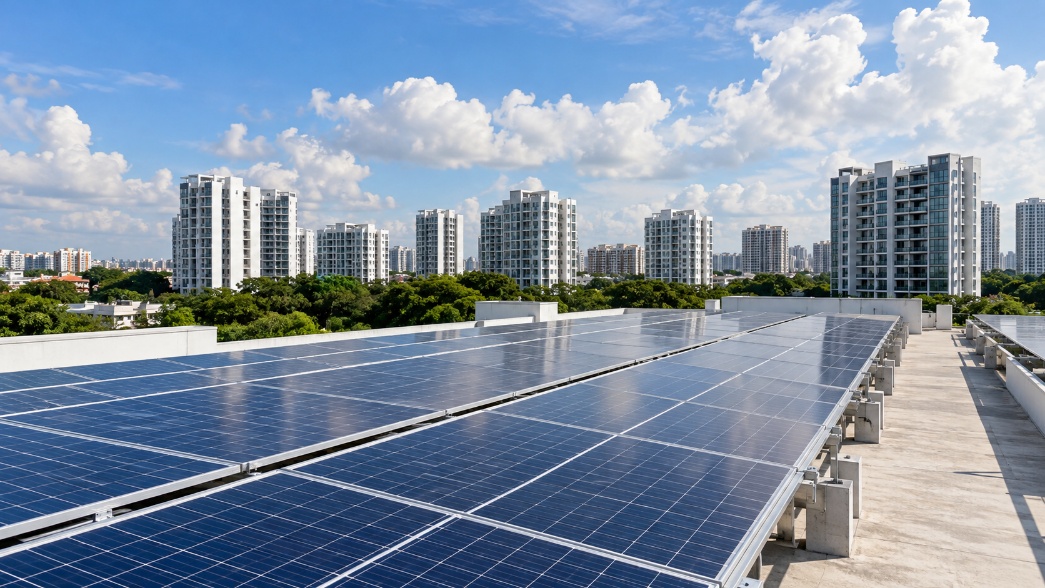
Of course, the roof is already a crowded committee. Water tanks, equipment and maintenance routes all have claims, while waterproofing would appreciate being consulted before everyone starts drilling. Inverter replacements and any leasing obligations inherited by the MCST also need consideration. Still, these are practical questions we can work through before construction.
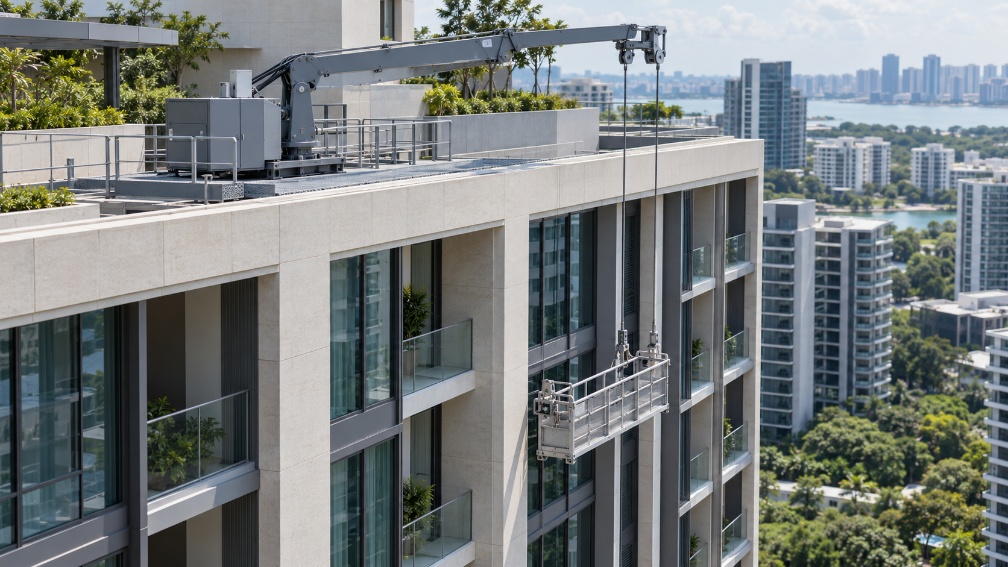
The same applies to improvements that will never get their own sales-gallery display: properly sized pool filtration, finishes that survive cleaning, façade details a maintenance crew can reach, and a sensible route for removing failed equipment. A pump does not become smaller because we have obtained TOP. These decisions influence maintenance costs for years, even if nobody describes them as “smart”.
There is evidence behind this. In July 2026, BCA released preliminary findings from a study with Surbana Jurong across four developments. For the residential project, additional investment was about 0.2% of construction cost, with potential annual operating savings of up to S$110,000. Most measures were estimated to pay back within five years. That gets my attention, although one residential project is hardly permission to paste the same returns into every feasibility study. It does, however, give us something more useful than “Trust me, this will save money.” BCA’s study findings
Maintainability was already part of Green Mark 2021. As we adopt Version 7, I would like us to carry that experience forward and become more disciplined about the evidence behind our choices.
The Developer Benefits Too
I also had to reconsider my own argument. Saying “the developer pays and someone else benefits” is a little too convenient. Better detailing can reduce defects, complaints and photographs arriving in our inboxes on Monday morning. Durable materials can support buyer confidence. A building that ages well does something useful for the developer’s reputation too.
We benefit. The difficulty is knowing how much. Will buyers pay more for easier maintenance when location, layout and price are competing for their attention? Perhaps, but I would hesitate to assign a generous sales premium to a well-designed pump room. Equally, putting its value at zero simply because it is difficult to quantify seems rather lazy.
Put Version 7 to Work Before Tender
This is where I would put Green Mark Version 7 to work: during feasibility and design, while decisions are still affordable to change. Bring facilities managers into the room and ask what happened in completed developments. Which materials lasted? Which systems cost more than expected? Which minor access problem became a regular invoice?
For a significant enhancement, show me the additional cost, expected savings, replacement obligations and assumptions. Put a simpler alternative beside it. If sales appeal is claimed, let sales test it. Then revisit the forecasts after occupation. Otherwise, every project inherits our optimism and remarkably little of our memory.
By tender, specifications are priced and plant rooms coordinated. During construction, an improvement acquires a variation order and several unhappy people. Timing belongs in the investment calculation too.
Residential developers need commercial discipline. That discipline should include understanding what our buildings will cost after we hand over the keys. For me, Green Mark Version 7 is an opportunity to make that conversation more useful: what improves, who benefits and whether the value justifies the cost.
We may still reject the million-dollar proposal. But we should understand what we are giving up—and be prepared to approve it when the evidence supports it. Even if our most worthwhile sustainability feature turns out to be enough room to get the pump out.